Source Square Head Carriage Bolt for Machinery Building Chemical
Find 30 square head carriage bolt options from verified Chinese manufacturers. Compare specifications including grades, finishes, and standards for machinery, building, and chemical industry applications.
Key considerations
Products List




Comprehensive Sourcing Guide
Strategic Sourcing Guide for Square Head Carriage Bolts
Understanding Product Variants and Core Specifications
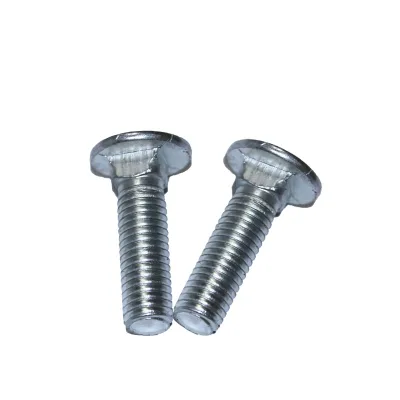
When initiating a procurement strategy for square head carriage bolts, buyers must first distinguish between the specific design requirements of the market and the generic terminology often used in search queries. While the core keyword "square head carriage bolt" is frequently searched, the supplied product data indicates a significant prevalence of "Round Head" variants, specifically labeled as "prod_prop.Head Style: Round" and "prod_prop.Type: Round Head." This discrepancy is critical for the procurement process. A buyer seeking a true square head must verify the "prod_prop.Head Style" attribute explicitly, as the available inventory heavily features round head configurations which serve different anti-rotation functions. The square head design is traditionally engineered to prevent the bolt from spinning within the material during nut tightening, whereas the round head variants listed often rely on the "prod_prop.Use: Movable in The Slots" and "prod_prop.Effect: Anti-Theft" attributes to achieve security or specific mechanical functions.
The technical specifications for these fasteners are diverse, reflecting a broad manufacturing capability. The thread types observed include "Unc, Unf, Nef," indicating that buyers must specify the exact thread standard required for their application. The available length range spans from "15mm-300mm," covering both small-scale machinery and large structural building projects. Furthermore, the product models range from specific codes like "CB002" and "CG196" to broader designations such as "N-123" and "standard." The diameter specifications are equally varied, with observed ranges including "M5-M20," "M3-M100," and "M6-M20, 1/4-3/4." This variation necessitates a rigorous verification of the "prod_model" and "prod_standard" attributes to ensure the fastener matches the load-bearing requirements of the intended assembly.
Compliance Standards and Certification Verification
Compliance with international standards is a non-negotiable aspect of sourcing industrial fasteners. The supplied data confirms that manufacturers adhere to a wide array of global standards, including "DIN, GB, ANSI, BSW, JIS" and "GOST." For buyers requiring specific regional compliance, the presence of "DIN603" as a customized standard is noted, alongside general references to "DIN, ANSI, BSW" and "GB." It is essential to understand that while "DIN903" appears in low-confidence background data, it should not be treated as a confirmed standard for a specific batch without direct supplier confirmation. Instead, procurement teams should request explicit documentation verifying that the product meets the specific standard code required for the project, such as "ANSI/ASME" or "DIN."
Certification status further validates the quality and reliability of the supply chain. The data explicitly lists "ISO" as a certificate held by the suppliers. This certification is a strong indicator of a standardized quality management system, which is vital for large-scale procurement in sectors like "Machinery, Chemical Industry, Environmental, Building." Buyers should verify that the ISO certification is current and covers the specific manufacturing processes involved, such as the "Hot Galvanizing" and "HDG" (Hot Dip Galvanizing) finishes observed in the product attributes. Additionally, the "prod_prop.prod_standard" is listed as "Customized" in some instances, suggesting that suppliers can tailor the fastener to meet specific project standards beyond the baseline "M5-M20" or "M2-M10" ranges. This flexibility is a significant advantage for specialized applications but requires clear communication of the required technical drawings and compliance matrices.
Material Composition and Surface Treatment Analysis
The longevity and performance of carriage bolts are heavily dependent on material composition and surface treatment. The primary material identified in the product data is "Carbon Steel," which provides a robust foundation for general-purpose applications. However, the grade of the steel varies, with specific observations of "Grade: 4" and "Grade: 8" associated with round head styles. Buyers must clarify the exact grade required for their application, as higher grades typically offer greater tensile strength and load-bearing capacity. The "prod_prop.Grade" attribute is a critical decision point, as it directly influences the mechanical properties of the fastener under stress.
Surface treatment is equally vital for corrosion resistance, particularly for applications in "Chemical Industry" or "Environmental" sectors where exposure to harsh elements is common. The data highlights two primary finishing processes: "Hot Galvanizing" and "HDG" (Hot Dip Galvanizing), with a general "Galvanized" finish also noted. These processes provide a thick zinc coating that significantly extends the service life of the carbon steel bolts. For buyers operating in high-corrosion environments, specifying "Hot Galvanizing" is often the preferred choice over standard electro-galvanizing. The "prod_prop.Surface" attribute confirms the availability of these treatments, but buyers should request test reports or coating thickness measurements to ensure the finish meets the specific environmental demands of their project. The "Technics: Welding" attribute suggests that some variants may be designed for welded assemblies, adding another layer of complexity to the material selection process.
Cost Drivers and Pricing Structure
Understanding the cost drivers for square head carriage bolts requires an analysis of the observed market data. The listed price range in the provided context is "0-1000" USD, which represents a broad spectrum likely encompassing different order quantities, material grades, and customization levels. The "Observed MOQ range: 1-100000" indicates that suppliers are flexible, catering to both small prototype runs and massive industrial orders. This flexibility allows buyers to optimize their inventory costs by aligning order sizes with their production schedules.
Several factors influence the final unit price. The "prod_packing" methods, ranging from "Plastic Bag+ Carton+Wood Pallet" to "Bag with Pallet" and "2000PCS/Bag and 20000PCS/CTN," directly impact logistics costs. Bulk packing options like "Bulk Packing; Palletized; as Required" can reduce packaging expenses but may require additional handling at the destination. The "prod_origin" locations, including "China," "Anhui," and "Shanghai, China," suggest that shipping costs and import duties will vary based on the specific supplier location within the region. Furthermore, the "ODM&OEM Service: Yes" attribute implies that custom designs or branding will incur additional costs compared to standard off-the-shelf items. Buyers should factor in these variables when negotiating the "Payment Term: T/T, 30% Prepayment and 70% Balance Against B/L," ensuring that the financial terms align with their cash flow requirements.
Typical Applications and Functional Requirements
The versatility of these fasteners is evident in the diverse "Application" categories listed, including "Machinery," "Building," "Chemical Industry," and "Environmental" sectors. The "prod_prop.Use: Movable in The Slots" and "prod_prop.Effect: Anti-Theft" attributes highlight specific functional requirements that go beyond simple fastening. In the "Building" sector, the "Anti-Theft" effect is crucial for securing fixtures in public or high-traffic areas where vandalism or theft is a concern. The "Movable in The Slots" feature suggests utility in applications where thermal expansion or structural adjustment is necessary, allowing the bolt to slide within a slot before being secured.
For "Machinery" and "Chemical Industry" applications, the "Link Fittings" and "Line Fittings, Substation Fittings" attributes indicate that these bolts are often used in critical infrastructure and heavy equipment. The "Type: Link Fittings" designation suggests a role in connecting chains or structural links, requiring high tensile strength and precise dimensional tolerances. The "Product Name: Carriage Bolts" confirms the primary classification, but the specific "Model" codes like "CG196" or "CB002" may denote specialized versions tailored for these heavy-duty uses. Buyers should map their specific application requirements to the "prod_prop.Type" and "prod_prop.Application" attributes to ensure the selected fastener can withstand the operational stresses of the environment.
Supplier Evaluation and Quality Control Protocols
Evaluating suppliers for carriage bolts requires a multi-faceted approach that goes beyond price comparisons. The presence of "ISO" certification is a baseline requirement, but buyers should also verify the supplier's ability to meet specific "Standard" requirements like "DIN603" or "GOST." The "prod_prop.prod_standard: Customized" attribute indicates that suppliers are capable of adapting to unique project needs, but this requires a robust quality control process. Buyers should request detailed quality assurance documentation, including material test reports for the "Carbon Steel" grade and coating thickness verification for the "Hot Galvanizing" process.
The "Location" data, showing origins in "Anhui" and "Shanghai," suggests a concentration of manufacturing capabilities in specific regions. Buyers should assess the logistical efficiency of suppliers in these locations, considering the "Export Term: Fob; CIF" options available. The "Payment Term" structure, involving a 30% prepayment and 70% balance against the Bill of Lading, is standard but requires careful management of risk. Quality control should also extend to the "prod_packing" methods to ensure that the fasteners arrive without damage or corrosion. For large orders, implementing a third-party inspection protocol before the 70% balance payment is released is a prudent measure to verify that the "prod_model" and "prod_standard" match the purchase order exactly.
Long-Term Procurement and Supply Chain Resilience
Long-term procurement strategies for carriage bolts must account for supply chain resilience and the potential for specification changes. The "Observed listed price range" and "MOQ range" suggest a dynamic market where suppliers can scale production up or down based on demand. However, buyers should be cautious of the "Low-confidence background" regarding standards like "DIN903" and ensure that all future orders are backed by high-confidence, verified data. The "ODM&OEM Service" capability offers a strategic advantage for buyers looking to develop proprietary fastener solutions, but it requires a long-term partnership with a supplier who can maintain consistent quality over time.
Sustainability and environmental compliance are increasingly important, particularly for applications in the "Environmental" sector. The "Hot Galvanizing" process, while effective, has environmental implications that should be discussed with the supplier. Buyers should inquire about the supplier's environmental management systems and whether they adhere to local regulations in "China," "Anhui," or "Shanghai." Additionally, the "prod_prop.prod_packing" options, such as "Wood Pallet," should be evaluated for sustainability, with a preference for recycled or certified wood materials where possible. By focusing on these long-term considerations, buyers can build a resilient supply chain that ensures the continuous availability of high-quality carriage bolts for their critical infrastructure and machinery projects.
FAQs
What head styles are available for carriage bolts?
The available head styles include round heads, as indicated by the product attributes. While square head variants are often searched, the current inventory data highlights round head configurations with specific anti-rotation or anti-theft effects for machinery and building applications.
Which standards do these bolts comply with?
These bolts comply with multiple international standards including DIN, GB, ANSI, BSW, JIS, and GOST. Some suppliers offer customized standards like DIN603, ensuring the fasteners meet specific regional or project requirements for machinery and chemical industry use.
How are the bolts finished for corrosion resistance?
The bolts are finished with hot galvanizing or HDG processes to ensure durability. This surface treatment provides a thick zinc coating suitable for harsh environments like chemical industries and outdoor building projects, protecting the carbon steel material from rust and corrosion.
Can I get custom sizes for these fasteners?
Yes, customization is available for various product models and specifications. Suppliers can tailor dimensions ranging from M2 to M100 and offer specific packing requirements, allowing buyers to match unique project needs beyond standard off-the-shelf inventory options.
What are the typical applications for these bolts?
These bolts are used in machinery, building, chemical industry, and environmental sectors. Specific applications include line fittings, substation fittings, and movable slots, where their anti-theft effects and structural integrity are critical for safety and long-term performance.
What payment terms are accepted for orders?
Standard payment terms include T/T with a 30% prepayment and 70% balance against the Bill of Lading. This structure is common for both small and large orders, accommodating the flexible MOQ ranges from 1 to 100,000 pieces observed in the market.